← Back to journal

Corporate team outings · Totem VR Arena

VR vs Escape Rooms for Corporate Team Outings: Which Is Better?

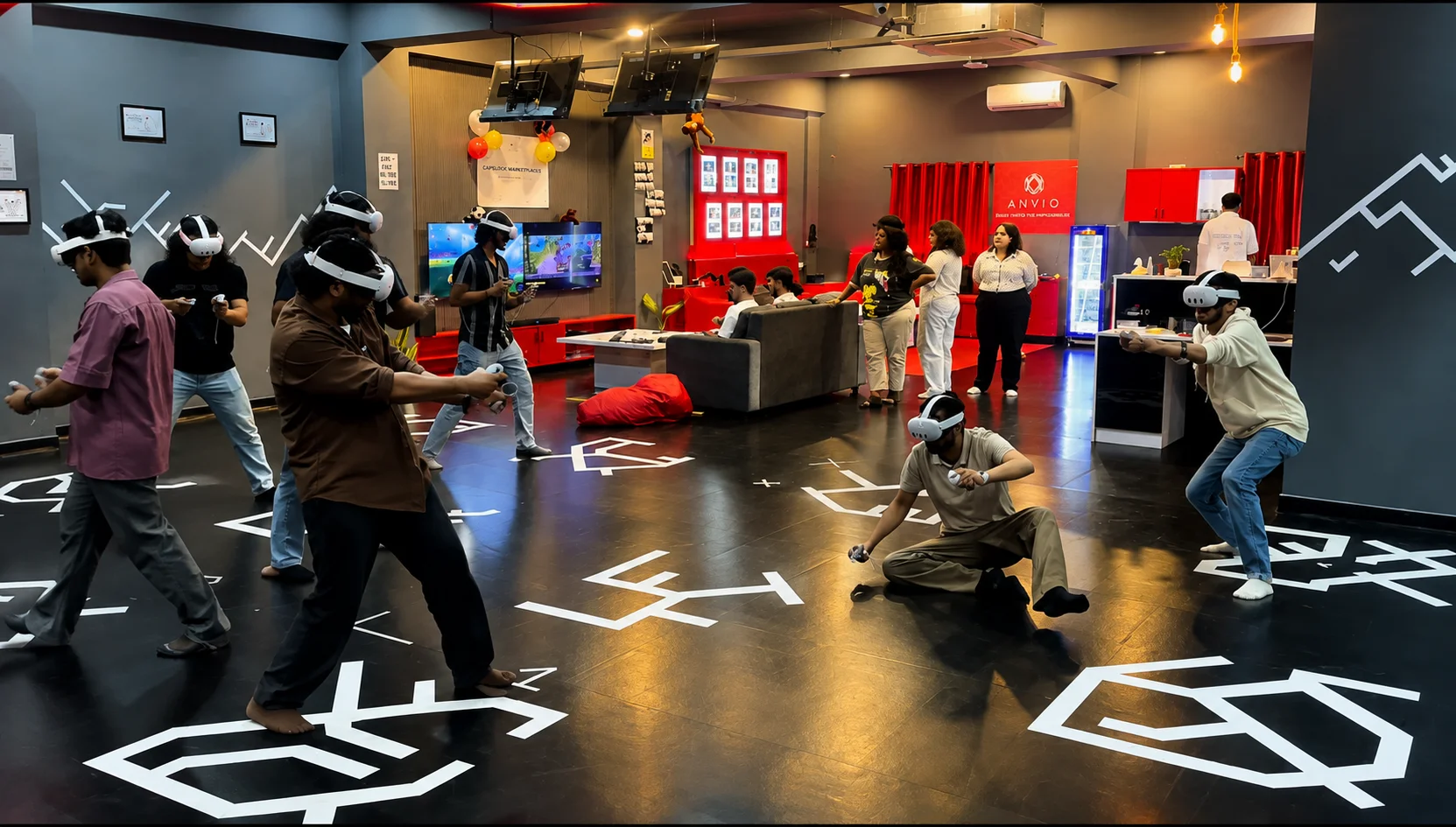
Corporate team playing free-roam VR at Totem Arena in Koramangala with lounge visible in the background

When planning an indoor corporate outing in Bangalore, HR leaders and managers usually look for two things: active participation and problem-solving under pressure.

For years, physical escape rooms were the default choice for teams that wanted something more engaging than a dinner or bowling night. Over the last two years, however, free-roam Virtual Reality arenas have rapidly taken over as the preferred alternative for tech and corporate off-sites.

If you are deciding between an escape room and a free-roam VR experience for your next team outing in Bangalore, here is an honest, operational comparison of how they stack up on team dynamics, group capacity, and overall engagement.
At a Glance: Key Differences

FeaturePhysical Escape RoomsFree-Roam VR at Totem
Primary skillStatic logic, clue-reading, lock-crackingDynamic movement, real-time communication, tactical teamwork
Team splittingRequired: max 5–8 per roomNot required: groups of 8–30 share one private venue and lounge
ParticipationDominant personalities solve; quiet members sit out100% active: everyone is inside the same game environment
Replay valueNone: once solved, cannot be repeatedHigh: 20+ worlds across sci-fi, horror, shooter, and fantasy
SocialisingWaiting teams sit in a lobbyPrivate lounge with Xbox, board games, and food and drinks on tap

1. Team Dynamics and Participation

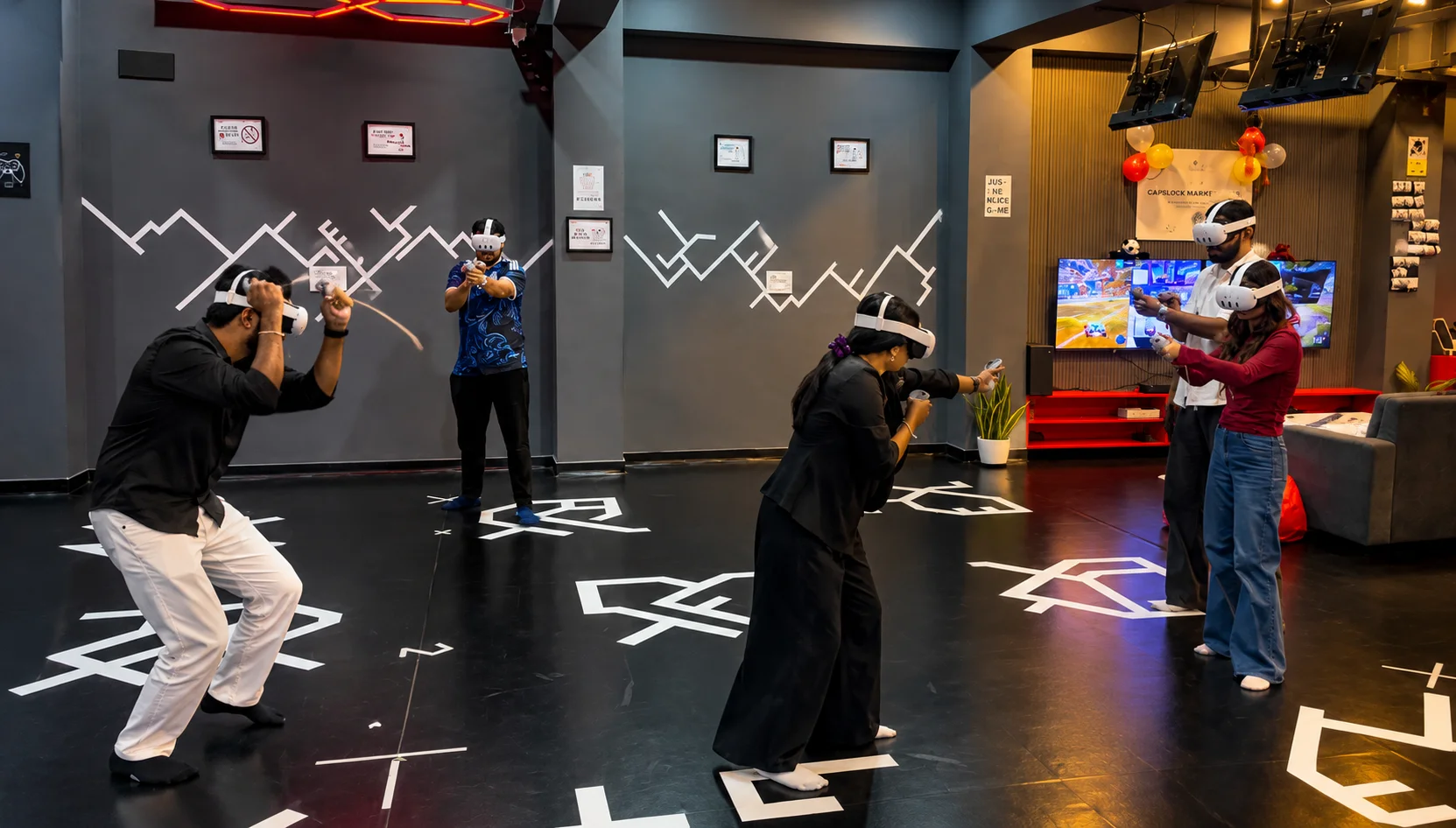
Corporate team members physically moving and collaborating inside Totem free-roam VR arena in Koramangala

Physical Escape Rooms

Escape rooms lock a small group inside a themed room with physical locks, hidden keys, and written riddles.

The upside: They work well for logical thinkers who enjoy decoding patterns and methodical problem-solving.

The challenge: Escape rooms often suffer from the Observer Effect. Two vocal or analytical members take charge of the clues while quieter teammates end up in the corner with little to do. If the team gets stuck on a single puzzle, momentum grinds to a halt and frustration follows.

Free-Roam VR

In a free-roam VR setup like Totem VR Arena in Koramangala, wires are eliminated. Team members step into a wide, open room wearing headsets and move naturally through a 3D digital world alongside each other.

The upside:VR is a sensory and spatial experience, not just a logic puzzle. Players must physically move, cover each other’s sightlines, and communicate continuously in real time. Hierarchy disappears.

The impact: Everyone has an active, physical role. An introvert who rarely speaks up in Zoom meetings often ends up leading tactical calls inside the virtual world.

2. Group Size and Venue Logistics

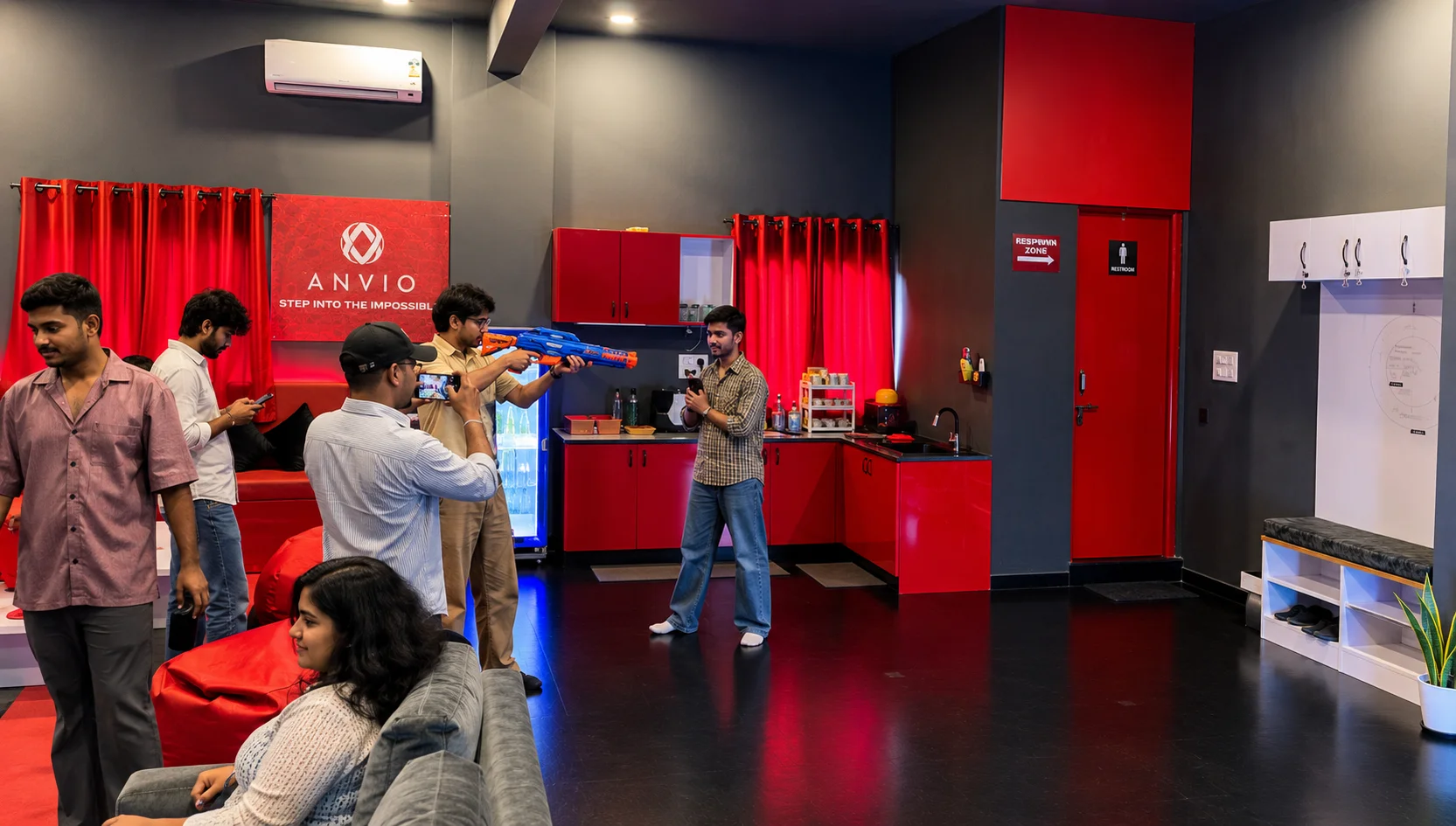
Employees relaxing in the private lounge with Nerf guns and refreshments during a team outing at Totem

Handling logistics for groups larger than 10 people is where the two formats diverge most sharply.

Escape rooms: fragmented by design

Physical rooms cap out at 6 to 8 people. A team of 20 must split into 3 or 4 separate rooms, playing entirely different puzzles with no shared experience. By the end of the day, large parts of the team have not been in the same room as each other. The “team outing” was technically four separate outings happening simultaneously.

Totem VR: everyone in one private venue

Totem is designed as a private corporate venue for groups of 8 to 30. While a squad of 6 goes into the main VR arena for an active round, the rest of the team rotates through Xbox consoles, board games, and snacks in the private lounge. Everyone stays in the same space, watching each other’s gameplay on big screens.

By the end of the session, every person on the team has shared the arena with every other person at least once. The shared reference point extends the conversation well past the venue.

3. Immersion and Realism

Escape rooms

Immersion relies on physical set design: wooden props, painted walls, electronic locks. High-end escape rooms in Bangalore have strong decor, but at the end of the day you are inside a 150 sq. ft. room looking at painted surfaces. The story exists mostly on printed paper taped to a wall.

Free-roam VR

Immersion is not bounded by physical construction. One minute your team is standing on a narrow beam above a skyscraper. The next, you are defending a space station from an incoming breach. Modern tracking technology ensures zero lag and no motion sickness, creating an adrenaline response that physical rooms cannot replicate.

The novelty matters for team outings specifically: people talk about experiences that surprised them. A painted room rarely generates the kind of story that gets retold in Monday standups. The arena usually does.

4. Cost and Corporate Convenience

The per-head cost at Totem is higher than a standard escape room booking. The difference is what is included: a fully exclusive private venue, a host who manages the entire day, a lounge setup so there is no dead time between rounds, and the paperwork HR needs to submit to finance.

For a team where the organiser’s time has a cost, an outing that runs itself is meaningfully cheaper than one that requires active management on the day.

The Verdict

Not sure how free-roam VR feels? Come and see before you book.

Totem offers a free 20-minute walkthrough for HR managers, founders, and event organisers. Come down to Koramangala, walk through the arena, check out the lounge, and make the call yourself before bringing your team.

See corporate packages →Get a quote on WhatsApp